Lyrics lesen


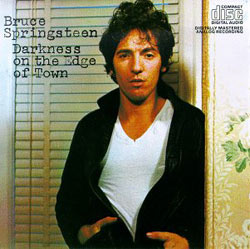
Darkness on the Edge of Town

Aufgenommen im Juni 1977 bis März 1978 in den Atlantic Studios, Record Plant Studios, New York, N.Y.
Veröffentlicht am 06. Juni 1978
Billboard Top Ten - Platz 5. erreicht am 17. Juni 1978
Zeitungsartikel im Rolling Stone lesen
 
Mitwirkende Künstler:
 
Bruce Springsteen - Gitarre, Gesang, Harmonika, Bass
  Roy Bittan - Keyboards
  Clarence Clemons - Saxophon, Gesang
  Garry Tallent - Bass, Horn
  Danny Federici - Keyboards, Gesang
  Steven van Zandt - Gitarre, Gesang
  Max Weinberg - Drums
  Suki Lahav - Violine (Born to Run)
  Ernest Carter - Schlagzeug (Born to Run)
  Michael Brecker - Saxophon
  Randy Brecker - Trompete
 
Produktion:
  Jimmy Iovine - Tonmeister
  Steve Van Zandt - Produktions Assistent
  Greg Calbi - Mastering
  Bob Ludwig - Re-Mastering
  Eric Meola - Coverfoto
  John Berg - Cover Designer
  Frank Stefanko - Fotografie
 
Tracklist:
 
Badlands 
  Adam Raised a Cain 
  Something in the Night 
  Candy's Room 
  Racing in the Street 
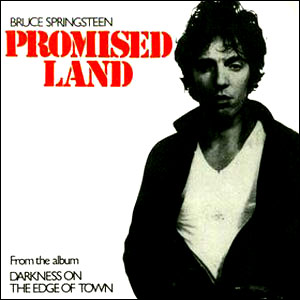
  The Promised Land 
  Factory 
  Streets of Fire 
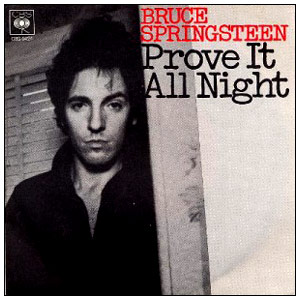
  Prove it All Night 
  Darkness on the Edge of Town
 
Infos:
Nach seiner Trennung von Manager Mike Appel ging Bruce Springsteen im Juni 1977 mit neuem Material ins Studio, um sein viertes Album aufzunehmen. Als neuer Manager trat erstmals Jon Landau in Erscheinung.
Der erste eingespielte Song hiess "Sherry Darling". Doch der Song fand erst auf "The River" seine Erstveröffentlichung.
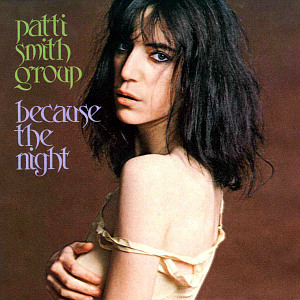
Einige unveröffentlichte Tracks wurden an andere Musiker weitergegeben. Unter anderem landete Patti Smith mit ihrer Interpretation von "Because the Night" einen Welthit. Robert Gordon und die Pointer Sisters spielten "Fire" ein. 
Insgesamt hatte Bruce über 100 verschiedene Songs zur Auswahl. "All Night Long", "Bring on the Night", "Don't look Back", "Endless Night", "Give the Girl a Kiss" sollten ursprünglich auf dem "Darkness" Album erscheinen. Letztendlich entschloss sich die Plattenfirma CBS, die Lieder nicht zu veröffentlichen.

Weitere Songs, die für "Darkness on the Edge of Town" eingespielt wurden:
 - Hearts of Stone
 - Iceman
 - So Young and in Love
 - The Promise
 - Taxi Cab
 - Preacher's Daughter
 - The Way
 - I'm Goin' Back
 - Break Out
 - Renezvous
 - Spanish Eyes
 - Because the Night
 - What's the matter little Darling
 - One Way Street
 - Get that Feeling
 - Crazy Rocker
 - Down by the River
 - Frankie
 - Fire
 - Independence Day
 - Sherry Darling
 - Drive all Night
 - Ramrod
 - Don't Say No
 - I wanna be with you
 - Outside Lookin' In
 - Castaway
 - Someday Tonight
 - Talk to Me
 - Broken Hearted
 - Action in the Streets
 - Come on, Come on
 - Paradise by the C
 - Love on the Wrong Side of Town
 - Little Girl so Fine
 - Trapped Again

Ursprünglich sollte das Album den Titel "American Madness" tragen, nach einem Film von Frank Capra aus dem Jahre 1932.
"Darkness on the Edge of Town" erreichte Platz 5 in den amerikanischen Billboard Charts. Die veröffentlichten Singles "Prove it all Night" und "Badlands" landeten auf Position 33 bzw. 42 der Billboard Single Charts.
Das Album findet man auf der Rolling Stone Liste der "500 Greatest Albums of all Time" auf Platz 151.
 
Veröffentlichte Singles:
 - Prove it All Night (USA - 09.06.1978)
   A-Seite: Prove it All Night
   B-Seite: Factory
  
 - Badlands (USA - 14.08.1978)
   A-Seite: Badlands
   B-Seite: Streets of Fire
  
 - The Promised Land (Europa - 1978)
   A-Seite: The Promised Land
   B-Seite: Streets of Fire
   
Jon Landaus Kritik:
Bruce had no interest in whether there was anything he could call a single. He was totally committed to making a record that was true to his own feelings. When you consider he had, but didn't use, songs like Fire and Because the Night, you've got to assume he didn't really want Darkness to be a big record. If success was what is was like with Born to Run, Bruce didn't want that. He didn't want one song that could be taken out of context and interfere with what he wanted to album to represent.
 
Kritik aus dem Rolling Stone Magazin:
For his fourth record, Bruce Springsteen cut off his beard - and also shaved the shaggy romantic epics of Born to Run. What emerged were ten taut rock songs about people crushed by family, by lust, by living in this world every day. (He was so focused on the theme of living with broken dreams, he left off "Fire" and "Because the Night," which became hit singles for the Pointer Sisters and Patti Smith, respectively.) Despite its lyrical weight and dour title, Darkness on the Edge of Town is not a bleak record. Its characters are groping toward redemption: "I believe in the hope that can save me," Springsteen sings on "Badlands." The narrator of "Racing in the Street" may never find the absolution he seeks by winning small-time drag races, but his vision of a better life is what keeps him driving and what keeps him alive.
The album isn't punk - Springsteen got a shave, not a mohawk - but it's colored by the raw sound happening in rock at the time. The E Street Band members play each song like it's their last chance to make music before their hands get cut off. Max Weinberg drums with particular passion, anchoring the record that stands as the E Street's best.
More than half the songs make some reference to driving, from streets of fire to the dusty road from Monroe to Angeline. But while Bob Dylan had Highway 61 and AC/DC had a highway to hell, Springsteen knew that the highway went everywhere: heaven, hell and the world men make for themselves.
  
Zeitungsbericht von Clinton Heylin aus dem Jahre 1993:
(Quelle nicht bekannt)

Clinton Heylin examines the unissued Springsteen LP from 1977, from "Record Collector," April 1993

In 1975, Bruce Springsteen issued "Born to Run," made the covers of "Time" and "Newsweek," and fell out with his manager, Mike Appel. An acrimonious legal battle ensued, leaving Springsteen's recording contract in the air, and effectively barring him from the studio.
The embargo was broken in 1978 with the release of "Darkness On The Edge Of Town," a very different record to anything Bruce had made before. Critics presumed that the album's deflated tone was a direct response to the lawsuit, but the gradual emergence over the next few years of a batch of studio out-takes recorded before the final "Darkness" sessions widened the debate out. As Clinton Heylin explains below, it was Springsteen's lyrics, as much as his music, which told the full story of what had happened, and why. In the second of our occasional "Lost Album" series examining what might have been, Heylin examines the album that should have been released between "Born To Run" and "Darkness" – if the twin forces off fate and the law hadn't intervened.

TRACKS: Rendezvous / Don't Look Back / I Wanna Be With You / Fire / Because The Night / The Fast Song / Candy's Boy / Hearts Of Stone/ The Promise Is Broken! / Something In The Night / Frankie

"When I did 'Darkness' I was focused on one particular idea, one particular feeling that I wanted to do... I just didn't make room for certain things, you know? Because I couldn't understand how you could feel so good and so bad at the same time." (Bruce Springsteen, 1981)

"Darkness On The Edge Of Town" only materialized after Springsteen rejected the results of five solid months' recording at Atlantic's New York studios, relocating to the Record Plant at the end of 1977. An LP from those sessions would have included some of his most important songs, with less of the oppressive feel of its illustrious successor. In his first three years with Columbia Records, Bruce Springsteen devised three albums, each of which advanced his sound and his lyrical concerns, to the point where he could achieve a large-scale canvas without any loss of detail. Unashamedly romantic, and with a reputation for marathon live performances which tapped into all the most resonant notions of American rock and roll, Springsteen finally reaped dividends from his dreams with 1975's "Born To Run."Three years later, "Darkness On The Edge Of Town" was an altogether bleaker view of small-town America in the bitter after-taste of busted dreams. It marked the end of a journey, but gave little explanation of how Springsteen had reached that destination.

The fact is that the resolution of his legal battle with Mike Appel in May 1977 was merely the beginning of another period of uncertainty in Springsteen's career -- this time in the studio. His obsessive recording methods -- which involved radical rearrangements of some songs, total discarding of others, all part of a painstaking progress towards some kind of perfection -- rapidly assumed mythological proportions. It also provided ammunition for critics, who pointed to his lack of discipline, his inability to channel his energies productively, and his general failure to utilize his fine band to optimum capacity. Springsteen devotees have had to defend the working methods of a man whose paucity of product in the 20 years since he signed to Columbia operates in inverse proportion to the reverence he attracts.

The Atlantic sessions lasted from June to November 1977. At the start, CBS was optimistic that they would have a new Springsteen album in the shops for Christmas; and it's true that plenty of the 20+ songs he recorded were left in releasable form. But Bruce himself wasn't happy with the results. Unlike most artists, Springsteen seemed driven to continue writing songs for "Darkness" when there was already a surfeit of usable material; and with each additional song, he compounded his own uncertainty about what he wanted the album to say. As he admitted in 1984, "It takes a long time making the records -- but what I take a long time doing is not the recording, it's in the conceptualizing of the record, where l write three or four songs, and the fifth one I’ll keep." The writing had been on the wall of 914 Studios, if Springsteen had returned to his former choice of recording venue to remind himself how tortuous the making of "Born To Run" had been. He had expended much time and effort burying the vibrant title-track beneath a morass of overdubbed strings, backing vocals and multi-dubbed guitars. But in those intimate (and relatively cheap) confines, Springsteen could exercise his seemingly pathological desire for duplicating Spector's wall of sound without incurring huge studio bills, in the knowledge that few people in America cared what the results might be.

When work commenced on the follow-up to that hugely successful album on June 1st 1977, expectations -- and studio bills -- were high, and there was a lot that Bruce wanted to say. According to the Dave Marsh version of rock mythology, Springsteen and the E-Street Band demoed twenty songs that first day at Atlantic. Not even the Dylan who recorded "Bringing It All Back Home" in two days, or the Van Morrison who taped "Astral Weeks" in three, had displayed such ostentatious genius. Twenty songs, all with band accompaniment of sorts -- all from a man who had, in years of post-"Born To Run" touring, premiered just half-a-dozen new songs. In reality, those twenty songs took five months to record --long enough to cut "Sgt. Pepper"! -- and like the ill-fated 914 sessions for "Born To Run," the results were passed over, this time in favor of the bleaker aesthetic of newer songs. And so was born the legend that the Atlantic sessions were largely fruitless. In fact, though, they produced at least a dozen notabIe cuts, including acceptable studio versions of five of the six new songs introduced live on his '76/'77 tours -- only one of which ("Something In The Night") would appear on the final album, and then only in somewhat castrated form.

DISCARDED
The songs cut at the Atlantic sessions were largely discarded because they were less of a break with the past than the tracks on the completed "Darkness" album. They represent the album Springsteen might have made as a successor to "Born To Run" if he hadn't been constrained from recording by a court order from Mike Appel. Here would have been "Frankie," "The Promise Is Broken," the original "Something In The Night" and "Rendezvous" -- all premiered at '76 shows, and all central to understanding how the kid "pulling out of here to win" on "Thunder Road" ended up racing down a dead-end street. Here also were songs that shared the unashamed sexuality of "Thunder Road" and "She's the One" -- songs like "Because The Night," "Fire" and "I Wanna Be With You."

On "Darkness," there may be a lot of kissing going on, but precious little else. The only released song that deals overtly with more animal passions is "Candy's Room," about a brief moment two lovers share before the high-class call girl relinquishes the narrator to service her clients. "Fire" and "Because The Night" -- hit singles for Robert Gordon and Patti Smith, respectively - are much more celebratory. On "Fire," guilt is discarded like one of Candy's clients, as two lovers own up to the fever ("You say you don't like it but girl, I know you're a liar/'Cause when we kiss, oooh, fire") . "Because The Night" was largely transformed by Patti Smith, who was more suited to the wanton nature of the lyrics than their author. Springsteen's Atlantic version is clearly little more than a prototype. But its celebration of the night's virtues provides a marked contrast to the "night" songs on "Darkness." If its central line is "Desire and hunger is the fire I breathe," some typical "Darkness" imagery encroaches - "I work all day pushin' for the man" -- though this time lust conquers all. If "Fire" and "Because The Night" didn't fit the monochrome vision that Springsteen sought to express on "Darkness," "Something In The Night" and "Candy's Boy" were two songs that, in stripped-down form, could have been made to work. In both instances, the Atlantic versions are radically different from the finished takes. "Something In The Night," in particular, suffered a fate similar to "Stolen Car" on "The River, " with large chunks of the story being lost, and the "meaning" obscured by belated lyrical changes.

As performed in the fall 1976 shows and recorded in June 1977 at Atlantic, "Something In The Night" is a more decisive "Thunder Road." In this original form, the song tells a simple story -- a classic song about cars and girls. The narrator picks up a hitch-hiker, but this girl is no Mary from Thunder Road. The first thing she does when she's picked up is lean her head out the window and scream. She needs no persuading to take that trip down Thunder Road, and the promise of free sex remains a constant backdrop to the song. It ain't just the car he can take to the floor: together, they "surrender to the justice of something in the night." In this version, it's the girl who coaxes the singer to "ride this road till dawn," and the narrator who admits to "stuff running round my head" that's holding him back.

Even before it reached the studio, "Something In The Night" lost its last verse -- when the two new lovers laugh "in the face of the Devil" -- though its story remained largely unchanged. On the released cut, though, the female hitch-hiker is entirely excised from the verses. There is no explanation of who the "we" in the final verse is (the only "person" apart from the narrator now in the song is the car). Indeed, the finished song makes little sense, coming across as a catalogue of disenchantments, carelessly assembled around the ethereal notion of "something in the night."

"Candy's Room," in its "Darkness" form, is considerably more successful-- the product of amalgamating two songs, "Candy's Boy" and what is normally referred to as "The Fast Song," both of which stand up well in their own right. In "The Fast Song," the narrator has been spurned by Candy in favor of "men who'll give her anything she wants" and, lifting a line from "I Wanna Be With You," Springsteen wishes that "God's angels would tear this town down and blow it into the sea." In "Candy's Boy," only the first verse closely parallels "Candy's Room." The remainder of the song recalls happier times when they were young and free, spending "weekends in the summer in that cheap hotel down by the dynamo." The song ends with lines lifted from "Frankie," implying that Candy and her boy's days are numbered.

If these songs could never have fitted in with the feel of "Darkness," there were two 1976 compositions which were not only suitable, but were largely responsible for the shift in approach represented by the cuts on the finished album. "Frankie" and "The Promise" represent the pillars of the bridge that separates Thunder Road and the edge of town. Both were recorded at Atlantic Studios, probably in the first few days of the sessions. "Frankie" had been the first post-"Born To Run" original Bruce had performed live (at shows in April 1976). After the completion of "Born To Run" in July 1975, Springsteen had experienced something of a writer's block, just as he had after finishing his second album, "The Wild, The Innocent And The E-Street Shuffle." Then it had been "Jungleland," a jazz- rock opera about "West Side Story" rejects, trading guns for guitars, which locked him into a new framework for his romantic visions.

Springsteen would later suggest that "Born To Run" represented the end of one kind of road, and "Darkness" the beginning of another. On the surface, "Frankie" seems to have a lot more in common with the ebullient search for gratification that takes up most of "Born To Run" than with the underlying sorrow at the heart of "Darkness." Certainly, the central image of a clandestine affair between two dreamers seems to reside within the landscape of "Born To Run." But a darker sensibility keeps raising its head: references to "fire on the outside of town" and "the finer things (that) sleep alone tonight" – images reused on "Darkness" -- hint at a new conciseness of phrasing, as the dreamers attempt to transcend the bleakness of Chelsea Row. The final phrase -- "Baby let your sadness rise" - gives way to music that attempts, like the star-crossed lovers, to rise through the raindrops pouring over their heads. Clarence Clemons' climactic sax break is one of his last great E-Street shuffles. In performance, "Frankie" was an eight-minute tour de force, encapsulating the E-Street sound at its best. It was also a song that Bruce would return to, during the recording of "Born In The USA. " But by then the bleak images had become more overt and forced. If the narrator of "Frankie" could still cling to his dreams, the central figure in Springsteen's next major work, "The Promise (Is Broken)," premiered at shows in October 1976, had no such thoughts. "The Promise" was shortlisted for "Darkness" right up to the final selection. It was allegedly cut because Springsteen feared it would be misinterpreted as a commentary on his recent legal difficulties (in which case, as Dylan wrote in 1964, "do not create anything/it will be misinterpreted").

"The Promise" is the central song of Springsteen's career. From that point on, the romance of youth would be a source of ridicule ("Glory Days"), false expectations ("The River") or foolhardy endeavor ("Racing In The Streets"). As Springsteen puts it, "When the promise was broken, I cashed in a few of my dreams." Re talked extensively on the 1978 and "River" tours about what the promise had meant to him: "The promise as such is connected with human nature and everybody's longing for redemption. It's about proving your own possibilities."

The actual song sets itself up as an orthodox Springsteen vision of camaraderie and dreams. There is Johnny the factory worker. Billy who "works downtown," and then there is Terry, who "works in a rock and roll band, looking for that million-dollar sound." And then there is the narrator -- because this song isn't about Johnny, or Billy, or Terry. The narrator never identifies himself, as he tells the story of how he built "a chopped-up Challenger" but needed money one night and sold it. Only when he took the money did he realize that he had broken the promise he'd made to himself. And then Springsteen confronts his own iconography. The chorus moves in like a sidewinder, and a low moan mutates into two words: "Thunder Road... there's something dying out on the highway tonight. "The spirit in the night. So this is what lay at the end of Thunder Road.

DRUNK
The final image, before a second refrain concludes the song, is of the narrator "drunk and far away from home, sleeping in the backseat of a borrowed car." A scary flash of deja vu crosses the screen -- of a drunk country singer slumped in the backseat of a Cadillac on New Year's Day 1953, Hank Williams, dead at 25 . Then it's that lonesome moan again: Thunder Road... here's one for the lost lovers and all the fixed games." "The Promise" really is for all the lost lovers. At the end of the song, the narrator is remembering when he and Billy were going to "take it all," in the days when dreams were as easy to find as gasoline. "The Promise" explains the transition from "Born To Run" to "Darkness" better than any of Springsteen's other songs.

"Hearts Of Stone" is a song that could not have been written before "The Promise." Well-known from its incarnation as title-track of fellow Jerseyite Southside Johnny's most accomplished album, "Hearts Of Stone" tells the story of an older woman phoning an ex-lover (presumably somewhat younger) hoping to rekindle the flame, but only finding that he is not alone, and is unwilling to return to his past love. The Final lines, though seemingly an attempt to spare her feelings, are brutal in their finality, "If there was something that I could do, I promise that I would." "Hearts of Stone" provides a nice contrast to all the young lovers redeemed on the remaining Atlantic cuts, who tend to adopt the belligerent attitude of the opening cut on "Darkness" where the singer promises "to spit in the face of these badlands." "Don't Look
Back," shortlisted for the final album, once again conjures up the star-crossed lovers who are determined to transcend the mundanity of their daily existence as they "blow off the door/ even the score.. . and don't look back." Likewise "Rendezvous," where the narrator promises the girl "we'll be riders on the night. " Springsteen himself recognized that he had chosen to omit these kinds of songs from "Darkness" and vouched, when the album was released, that the follow-up would amend this oversight: "I got an album's worth of pop songs like "Rendezvous" and early English-style stuff I got an album's worth right now, and I'm gonna get it out somehow... (Making "Darkness") I just didn't feel it was the right time to do that, and I didn't want to sacrifice any of the intensity of the album by throwin' in (songs like) "Rendezvous. "

When Springsteen finally made the decision to relocate the sessions to Record Plant, where he and Jon Landau had previously completed "Born To Run," it was as if he had gotten the album he would have recorded at the end of 1976 -- circumstances permitting -- out of his system; that he needed to do this album before he could move on to what happened when the promise was broken, even if he had no intention of releasing the results. Dylan seemed to feel "The Basement Tapes" was simply a means of getting from "Blonde On Blonde" to "John Wesley Harding." Such seems to be the case with Springsteen's 1977 album. Bruce has proved in the last decade that he was never able to just go into a studio and cut an album in two weeks and damn the consequences.

Each album has been made to undergo a tortuous metamorphosis -- from the "album's worth of pop songs" into "The River," or the electric "Nebraska" into "Born In The USA," until the ultimate expression of Springsteen's artistic schizophrenia, "Human Touch" and "Lucky
Town." Only this time, he released the collection of (generally substandard) out-takes that mark the bridge between "Tunnel Of Love" and "Lucky Town." As for "The Promise" (or whatever the original working title of Springsteen's fourth album might have been), none of these Atlantic cuts have been released officially, though all circulate freely on bootleg. Indeed, rumors abound of an imminent release of a definitive "Darkness" out-takes bootleg CD, "The Promise Is Spoken." Meanwhile, if Columbia, looking for another subject on whom to exact a "Bootleg Series" boxed set a la Dylan, then they need look no further than the only new Dylan to outsell the old one. - Clinton Heylin, "Record Collector," April 1993